Evolution Factor turns vehicle rescue into a hands-on playground of forklifts, tow trucks, and excavators. Instead of chasing lap times, you recover broken cars, repair them, and shape stunt courses. Every job feels physical because your equipment matters.
The game runs directly in the browser through Unity WebGL. Its two expansive scenes combine open roads, repair garages, and industrial yards. Single-player play gives you room to test machines, learn their controls, and tackle recovery work at your own pace.
Start with the drive keys, then learn each vehicle’s special role. Use WASD or the Arrow Keys to move, and press C to change the camera. When you are ready to play Evolution Factor online, begin with a simple rescue and build confidence from there.
Evolution Factor Utility Fleet and Machinery
Operating Industrial Service Rigs
Choose the right machine for the job. Evolution Factor features forklifts, tow trucks, and excavators. Each one supports the wider rescue loop in a different way. Forklifts handle controlled lifting. Tow trucks move disabled cars. Excavators add heavy equipment variety to the industrial sandbox.
Start by driving with WASD or the Arrow Keys. Keep your speed measured near damaged vehicles. A fast approach makes lining up harder, especially when the target sits at an awkward angle. Use the camera change key, C, to get a better view before you commit.
Look for broken cars across the open scenes. Then bring the needed rig close enough for careful work. A tow truck suits direct hauling, while a forklift gives you more control over the load. The excavator belongs in the heavier equipment mix, helping the game feel like a working vehicle yard instead of a normal racing course.
Plan the route before moving a disabled car. Wide turns reduce sudden swings. Slow corrections keep the vehicle from scraping nearby areas. This approach also makes stunt-course building easier later, because you learn how each machine responds to weight, space, and momentum.
Forklift Arm and Lift Controls
Use the forklift’s four dedicated controls in pairs. Press U for Arm up and J for Arm down. Press I for Fork up and K for Fork down. The arm and front prongs move independently.
Raise the full lift assembly first when you need clearance. Then adjust the front prongs with I or K. Small inputs help balance uneven loads during transport. Keep the forklift steady, and avoid carrying an object while turning sharply.
Navigating Environments in Evolution Factor
Industrial Testing Yards
Industrial yards give the utility fleet space to work. Use them to compare steering, turning room, and equipment reach. The open layout lets you approach damaged cars from different directions. That freedom matters when a straight drive does not provide a clean setup.
Drive slowly during your first pass. Watch how the vehicle reacts when you change direction. Then use the camera key, C, to check your position from another angle. A clear view helps you place a tow truck or forklift without wasting movement.
Testing also reveals the difference between driving and handling a load. An empty rig responds more simply. A loaded forklift demands smoother turns and better spacing. Practice short movements before attempting a longer haul through the scene.
Use the roads between work areas as travel routes. Keep the vehicle under control instead of treating every stretch as a race. Evolution Factor rewards careful equipment operation more than lap speed. That change in focus makes each yard feel like a practical driving test.
Garages and Recovery Bays
Garages serve as important destinations during recovery work. Bring a disabled car there after finding and securing it. The repair key, R, restores damaged vehicles to drivable condition.
Use the bays as reset points for your rescue plans. Repair the car, regain control, and continue exploring the scene. The garage turns a failed drive into another chance to test the fleet.
Mastering the Tow and Repair Cycle
Locating Disabled Cars
Begin each rescue by scanning the terrain. Disabled cars may sit away from your starting position, so drive through the open areas with purpose. Check roads and industrial spaces rather than circling one spot repeatedly.
Approach the target at a controlled speed. A clear angle makes hitching easier with a tow truck. If the recovery needs lifting, choose the forklift and line up its front prongs with care. Use U, J, I, and K to set the lift assembly and fork height.
Secure the vehicle before moving away. Keep your steering gentle once the car starts traveling with the service rig. Sudden turns create poor alignment and make the return trip harder. Treat the disabled car as the main focus, not as extra weight you can ignore.
Take the damaged vehicle to a garage. Once it reaches the repair area, press R to trigger the repair. The chassis returns to drivable condition, letting you continue the single-player recovery loop without abandoning the scene.
Executing Safe Garage Returns
Choose the simplest route back. Slow down before turns, then make wide corrections. Keep the load stable and avoid sharp braking with the Space Bar.
Reach the garage before changing vehicles. Press R once the damaged car sits in the recovery area. Repairing it completes the practical part of the rescue and prepares the car for more driving.
Try Evolution Factor here, then put the rescue cycle into practice.
Building Stunt Runs and Obstacle Courses
Arranging Objects and Ramps
Evolution Factor also supports creative construction with its vehicle sandbox. Use the fleet to shape custom ramps and obstacle courses. Start with a simple route that tests one movement at a time. A short jump or tight turn gives you a clear performance check.
Move objects into place with steady inputs. Forklifts work best when you separate arm movement from fork movement. Raise the arm with U or lower it with J. Adjust the front prongs with I and K. This independent control helps you set height and reach more precisely.
Leave enough room for the test vehicle. A course should challenge the driver without blocking every approach. Place turns after straight sections, then inspect the route from another camera angle with C. Small layout changes can make a run smoother and easier to repeat.
Use the tow truck or excavator when the course needs a different kind of machine. The goal is not a perfect race track. Build a space that shows how utility vehicles handle ramps, objects, and uneven movement.
Testing Fleet Performance
Test one vehicle at a time. Drive the route with WASD or the Arrow Keys, then compare how each rig handles the same section.
Use the forklift after checking its load controls. Try the tow truck next, then bring in the excavator. Watch turning space, approach angles, and recovery control. A short course reveals these differences quickly.
Evolution Factor FAQs
What are the controls for Evolution Factor?
The tested controls are WASD — Drive; Arrow Keys — Drive; Space Bar — Handbrake; Return — Unflip; C — Change camera; R — Repair.
Do I need to download anything to play Evolution Factor?
No. Evolution Factor runs in the browser on this page, with no download, plugin or account.
Conclusion
Evolution Factor offers a focused single-player vehicle simulation built for the browser. Its flexible driving controls let you take the wheel with WASD or the Arrow Keys, use the Space Bar for the handbrake, and switch camera views with C. When things go wrong, Return can unflip the vehicle, while R provides a handy repair option.
The experience stands out further with forklift-specific controls: U and J move the arm, while I and K raise or lower the forks. This combination of driving, vehicle recovery, camera control, and precise forklift operation gives Evolution Factor a distinctive hands-on feel. Play Evolution Factor here on this page and experience its vehicle simulation for yourself.
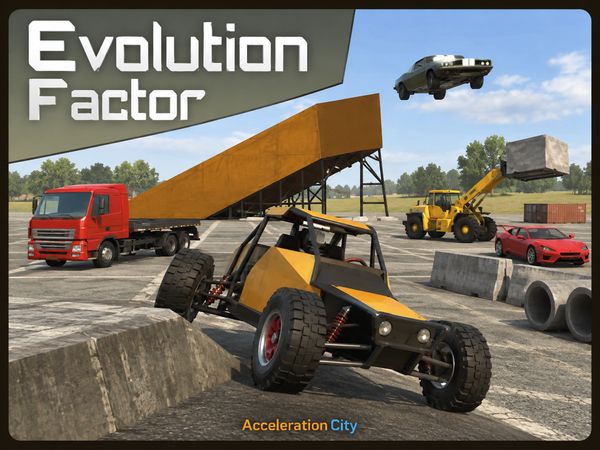
Evolution Factor Game Image

No comments yet. Be the first to share your thoughts!